
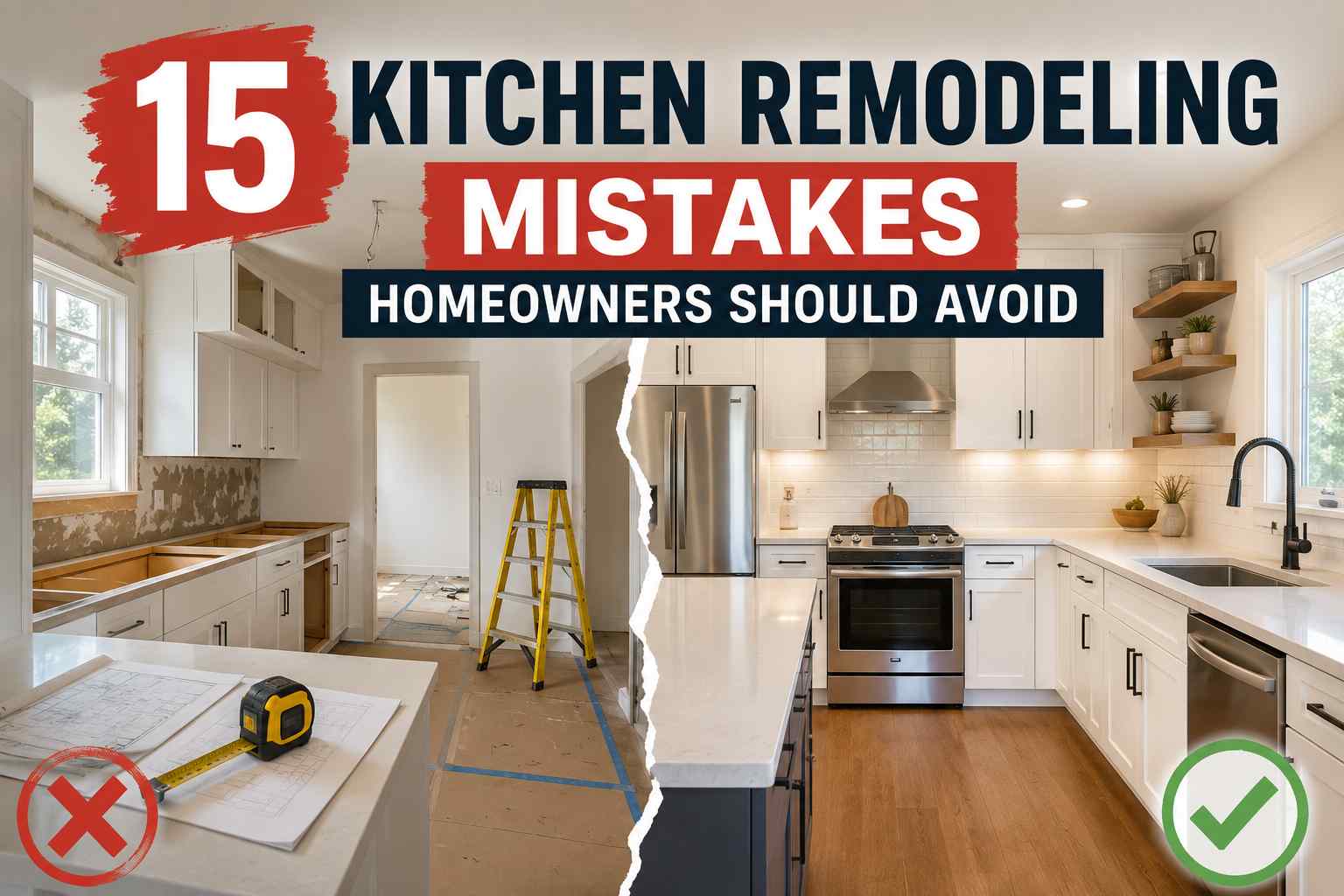
A kitchen remodel is exciting. It can make your home feel fresh, work better, and even increase its value. But it can also become stressful if you make a few simple mistakes.
We have seen many common kitchen remodeling mistakes that cost homeowners time and money. The good news is that most of them are easy to avoid with the right plan. In this kitchen remodeling guide for homeowners, we’ll walk through the biggest mistakes and show you how to avoid them.
Recent Blog: Quartz vs. Granite Countertop: Which is Best for Your Home?
Why Planning Comes First?
It is tempting to jump right into picking cabinets or countertops. But slow down for a minute. A good plan helps you stay on budget. It also helps you avoid surprises that can throw the whole project off track. Before you begin, think about these things:
| What to Plan | Why It Matters |
| Budget | Keeps spending under control |
| Layout | Makes cooking easier |
| Storage | Gives everything a place |
| Lighting | Helps you work safely |
| Timeline | Reduces delays |
| Contractor | Helps the job run smoothly |
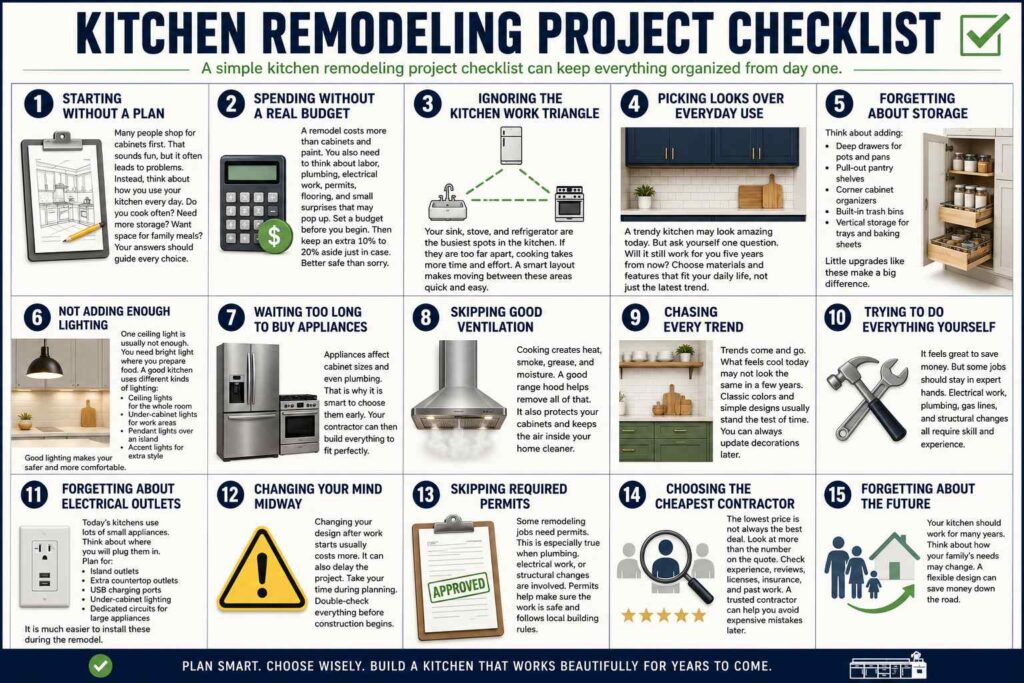
A simple kitchen remodeling project checklist can keep everything organized from day one.
1. Starting Without a Plan
Many people shop for cabinets first. That sounds fun, but it often leads to problems. Instead, think about how you use your kitchen every day. Do you cook often? Need more storage? Want space for family meals? Your answers should guide every choice.
2. Spending Without a Real Budget
A remodel costs more than cabinets and paint. You also need to think about labor, plumbing, electrical work, permits, flooring, and small surprises that may pop up. Set a budget before you begin. Then keep an extra 10% to 20% aside just in case. Better safe than sorry.
3. Ignoring the Kitchen Work Triangle
Your sink, stove, and refrigerator are the busiest spots in the kitchen. If they are too far apart, cooking takes more time and effort. A smart layout makes moving between these areas quick and easy.
4. Picking Looks Over Everyday Use
A trendy kitchen may look amazing today. But ask yourself one question. Will it still work for you five years from now? Choose materials and features that fit your daily life, not just the latest trend.
5. Forgetting About Storage
Running out of storage gets old fast. Think about adding:
- Deep drawers for pots and pans
- Pull-out pantry shelves
- Corner cabinet organizers
- Built-in trash bins
- Vertical storage for trays and baking sheets
Little upgrades like these make a big difference.
6. Not Adding Enough Lighting
One ceiling light is usually not enough. You need bright light where you prepare food. A good kitchen uses different kinds of lighting:
- Ceiling lights for the whole room
- Under-cabinet lights for work areas
- Pendant lights over an island
- Accent lights for extra style
Good lighting makes your kitchen safer and more comfortable.
7. Waiting Too Long to Buy Appliances
Appliances affect cabinet sizes and even plumbing. That is why it is smart to choose them early. Your contractor can then build everything to fit perfectly.
8. Skipping Good Ventilation
Cooking creates heat, smoke, grease, and moisture. A good range hood helps remove all of that. It also protects your cabinets and keeps the air inside your home cleaner.
9. Chasing Every Trend
Trends come and go. What feels cool today may not look the same in a few years. Classic colors and simple designs usually stand the test of time. You can always update decorations later.
10. Trying to Do Everything Yourself
It feels great to save money. But some jobs should stay in expert hands. Electrical work, plumbing, gas lines, and structural changes all require skill and experience.
11. Forgetting About Electrical Outlets
Today’s kitchens use lots of small appliances. Think about where you will plug them in. Plan for:
- Island outlets
- Extra countertop outlets
- USB charging ports
- Under-cabinet lighting
- Dedicated circuits for large appliances
It is much easier to install these during the remodel.
12. Changing Your Mind Midway
Changing your design after work starts usually costs more. It can also delay the project. Take your time during planning. Double-check everything before construction begins.
13. Skipping Required Permits
Some remodeling jobs need permits. This is especially true when plumbing, electrical work, or structural changes are involved. Permits help make sure the work is safe and follows local building rules.
14. Choosing the Cheapest Contractor
The lowest price is not always the best deal. Look at more than the number on the quote. Check experience, reviews, licenses, insurance, and past work. A trusted kitchen remodeling contractor can help you avoid expensive mistakes later.
15. Forgetting About the Future
Your kitchen should work for many years. Think about how your family’s needs may change. A flexible design can save money down the road.
Easy Ways to Stay on Track
Knowing how to avoid kitchen remodeling mistakes can make the whole project much smoother. Here are a few simple ideas:
- Set a realistic budget.
- Measure everything twice.
- Pick appliances early.
- Focus on function first.
- Review your design before work starts.
- Keep extra money for surprises.
- Hire experienced professionals.
These simple tips for remodeling a kitchen can help your project stay on track.
Kitchen Remodeling Project Checklist
Use this checklist before work begins.
| Task | Done |
| Set your budget | □ |
| Decide your goals | □ |
| Finish the layout | □ |
| Pick cabinets and countertops | □ |
| Choose appliances | □ |
| Plan lighting and outlets | □ |
| Check permit needs | □ |
| Confirm the timeline | □ |
| Review the contract | □ |
| Plan a temporary kitchen | □ |
A simple kitchen remodeling project checklist helps you stay organized from start to finish.
Should You Hire a Professional?
Painting walls is one thing. A full kitchen remodel is another story. It often includes plumbing, electrical work, flooring, cabinets, and inspections. A skilled professional kitchen remodeling service can manage every step and help prevent costly mistakes. If you are searching for a home remodeling company near you, do a little homework first. Read reviews. Ask questions. Look at completed projects. Also ask for a written kitchen remodel estimate so you know what is included. Many companies also provide a free kitchen remodeling estimate, making it easier to compare your options.
Ready to Remodel Your Kitchen?
A great kitchen does not happen by luck. It starts with smart planning and good decisions. When you avoid these common mistakes, your remodel becomes much easier and far less stressful.
If you are ready to get started, we at Creative Design Ceramic Tile & Bath are here to help. If you need a detailed, free kitchen remodeling estimate, we will guide you through every step. Our goal is simple. We want to help you build a kitchen that looks great, works well, and fits your family’s needs for years to come.
Frequently Asked Questions
Q1: What are the biggest kitchen remodeling mistakes?
Poor planning, weak budgeting, not enough storage, bad lighting, and hiring the wrong contractor are some of the biggest mistakes homeowners make.
Q2: How do you avoid kitchen remodeling mistakes?
Plan, set a realistic budget, measure carefully, choose materials early, and work with experienced professionals from the beginning.
Q3: What should you not do during a kitchen remodel?
Do not rush decisions, skip permits, ignore your budget, or change the design after construction has already started.
Q4: What is the most expensive part of a kitchen remodel?
Cabinets are usually the biggest expense. Labor, countertops, and appliances also make up a large part of the total cost.
Q5: How do I plan a successful kitchen remodel?
Know your goals, create a budget, make a timeline, choose materials early, and keep clear communication with your contractor.
Q6: What should I budget for a kitchen remodel?
Costs vary by kitchen size and material choices. Always save an extra 10% to 20% for unexpected repairs or changes.
Q7: Is it worth hiring a kitchen remodeling contractor?
Yes. An experienced contractor helps manage the project, follows local building codes, and helps avoid mistakes that could cost more later.