
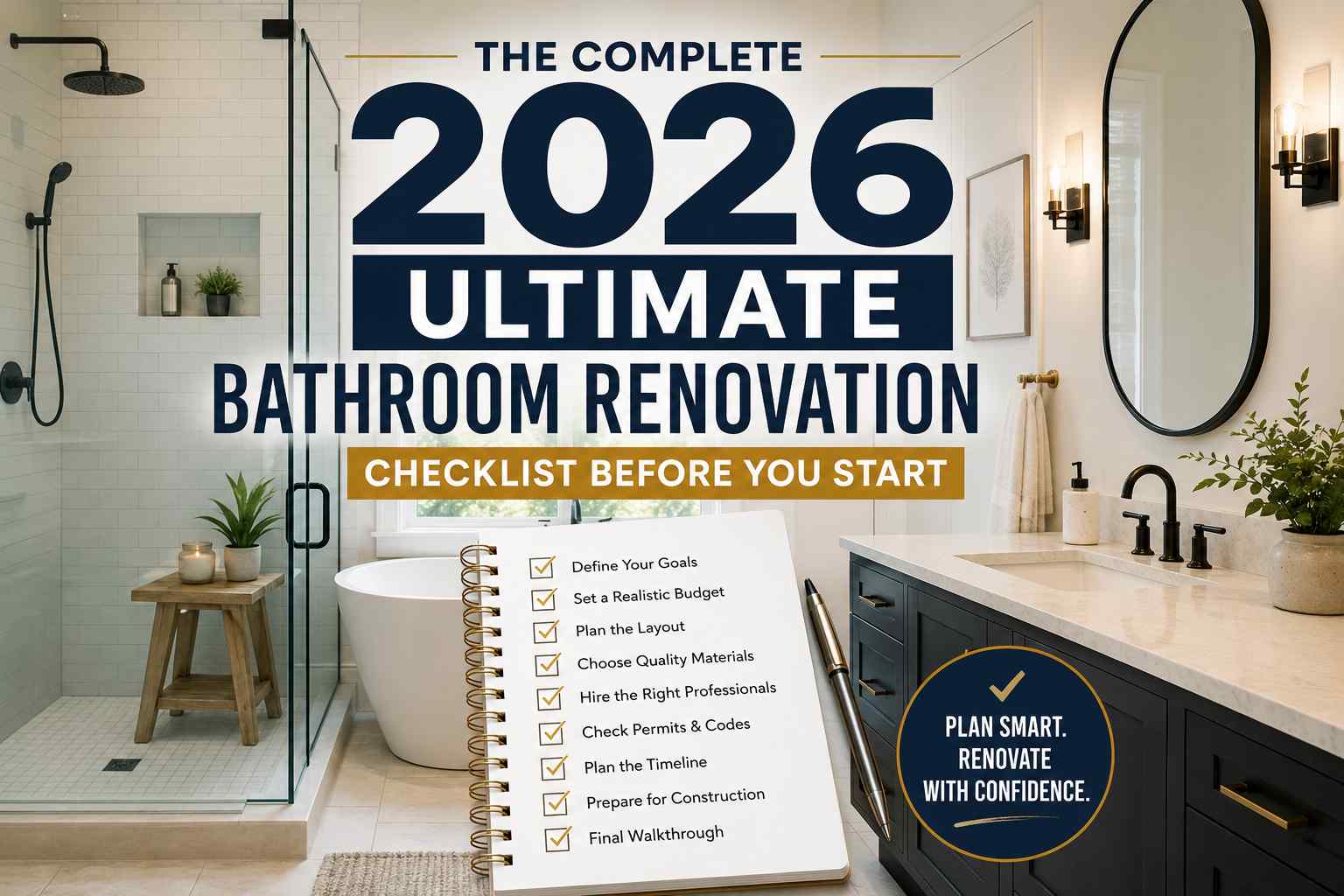
Planning a home remodel is exciting, but a bathroom renovation requires careful preparation to avoid unexpected costs, delays, and design mistakes. Whether you’re updating a small guest bathroom or creating a luxurious primary suite, having a clear plan before demolition begins can save you time, money, and stress.
This bathroom renovation guide provides a complete checklist to help you prepare every stage of your project. From setting a realistic budget and selecting durable materials to checking plumbing and hiring experienced professionals, you’ll find practical advice that keeps your renovation on track.
What’s New in Bathroom Renovations for 2026?
Homeowners in 2026 are focusing on creating bathrooms that are stylish, functional, and energy efficient. Some of the biggest bathroom renovation ideas include:
- Smart mirrors with built-in lighting and anti-fog technology
- Water-saving toilets and faucets
- Large-format porcelain tiles with fewer grout lines
- Floating vanities for a modern appearance
- Heated flooring for added comfort
- LED backlit mirrors
- Eco-friendly and moisture-resistant materials
- Matte black, brushed nickel, and warm brass fixtures
- Curbless showers for accessibility
- Better ventilation systems to improve indoor air quality
Including these features during your renovation can improve comfort, reduce maintenance, and increase your home’s value.
Step 1: Set Your Budget and Timeline
Every successful renovation starts with a realistic budget and a practical schedule. One of the biggest reasons bathroom remodels exceed expectations is poor planning before work begins.
Understanding your financial limits early allows you to make informed decisions about materials, labor, and upgrades without unnecessary stress.
Create a Smart Bathroom Renovation Budget
Before shopping for fixtures or selecting tile, estimate the total cost of your renovation.
Budget Planning Checklist
✔ Decide how much you’re comfortable spending.
✔ Prioritize must-have upgrades before luxury additions.
✔ Reserve at least 15–20% of your budget for unexpected expenses such as hidden plumbing damage, mold, or electrical repairs.
✔ Separate labor costs from material costs.
✔ Compare quotes from multiple contractors.
✔ Keep track of every purchase, including fixtures, tile, paint, lighting, permits, and accessories.
Typical Bathroom Renovation Budget (2026)
| Bathroom Type | Estimated Cost |
|---|---|
| Cosmetic Update | $3,000–$7,000 |
| Standard Remodel | $8,000–$18,000 |
| Premium Renovation | $20,000–$40,000+ |
Actual costs vary depending on bathroom size, material selections, labor rates, and structural changes.
Build a Realistic Timeline
A bathroom renovation rarely finishes overnight. Planning enough time helps prevent unnecessary delays.
Typical Project Timeline
| Project Phase | Estimated Time |
|---|---|
| Planning & Design | 1–2 weeks |
| Material Ordering | 2–6 weeks |
| Permit Approval | 1–4 weeks |
| Demolition | 1–3 days |
| Plumbing & Electrical | 2–5 days |
| Tile Installation | 3–7 days |
| Fixture Installation | 2–4 days |
| Final Inspection & Touch-ups | 1–3 days |
Remember that custom cabinets, specialty fixtures, and imported tile can increase lead times.
Before You Spend Any Money: Inspect Your Bathroom
Many homeowners start choosing finishes before understanding the condition of their existing bathroom.
A thorough inspection helps identify problems that could become expensive after demolition begins.
Inspection Checklist
✔ Check for mold around tubs and showers.
✔ Look for soft or damaged flooring.
✔ Inspect walls for moisture stains.
✔ Test faucets for leaks.
✔ Examine old plumbing pipes for corrosion.
✔ Check water pressure.
✔ Inspect the electrical panel if adding new lighting.
✔ Confirm the exhaust fan is working properly.
✔ Look for signs of poor ventilation.
✔ Inspect windows for water intrusion.
Finding these issues early allows you to plan repairs before installing new finishes.
Step 2: Design Your Layout and Choose Materials
This is where your favorite bathroom renovation ideas come to life. While changing the entire layout may seem appealing, keeping plumbing fixtures in their existing locations often reduces labor costs significantly.
A functional layout should balance storage, comfort, and accessibility while making the room feel larger and easier to use.
Layout Planning Checklist
✔ Measure the room carefully before ordering products.
✔ Verify that cabinet doors can fully open.
✔ Ensure enough walking space around the toilet and vanity.
✔ Consider future accessibility needs.
✔ Include sufficient storage for toiletries and towels.
✔ Plan lighting for mirrors, showers, and task areas.
✔ Position towel bars and accessories before tiling.
✔ Decide where electrical outlets will be installed.
Keeping your plumbing layout unchanged whenever possible is one of the easiest ways to reduce renovation costs.
Choose Durable Materials
Selecting quality materials improves durability and reduces future maintenance.
Flooring
- Porcelain tile
- Ceramic tile
- Luxury vinyl plank (waterproof)
Walls
- Moisture-resistant drywall
- Waterproof backer board inside showers
- Mold-resistant paint
Countertops
- Quartz
- Granite
- Solid surface materials
Cabinets
- Plywood construction
- Soft-close hinges
- Moisture-resistant finishes
Fixtures
Choose products with strong manufacturer warranties and WaterSense certification whenever possible.
Order Materials Before Demolition
One of the most common renovation mistakes is starting demolition before all materials arrive.
Before work begins, confirm delivery of:
✔ Vanity
✔ Sink
✔ Faucet
✔ Toilet
✔ Shower fixtures
✔ Bathtub
✔ Tile
✔ Grout
✔ Lighting
✔ Mirror
✔ Exhaust fan
✔ Hardware
✔ Paint
✔ Trim
Waiting for backordered products can delay your renovation by several weeks.
Expert Tip
Professional home renovation experts recommend ordering all major materials before demolition starts. Having everything on-site reduces delays and allows contractors to work more efficiently.
Step 3: Check Plumbing, Electrical, and Ventilation Systems
Behind every beautiful bathroom is a solid foundation. Before installing new tile, cabinets, or fixtures, inspect your plumbing, electrical, and ventilation systems. Investing in these hidden components now can prevent expensive repairs later and ensure your renovation meets current building codes.
This part of our bathroom renovation guide focuses on the systems that protect your investment for years to come.
Plumbing Inspection Checklist
Many homeowners overlook plumbing until a leak appears after the renovation is complete. Inspecting your plumbing before demolition can save thousands of dollars.
Plumbing Checklist
✔ Inspect water supply lines for corrosion or leaks.
✔ Replace outdated galvanized pipes if necessary.
✔ Consider upgrading to modern PEX plumbing where appropriate.
✔ Check drain pipes for slow drainage or damage.
✔ Verify water pressure throughout the bathroom.
✔ Replace worn shut-off valves.
✔ Inspect the toilet flange for damage.
✔ Confirm all plumbing connections meet local building codes.
If you’re planning to relocate the shower, bathtub, or toilet, discuss the plumbing requirements with your contractor before finalizing the design.
Water Damage Prevention
Proper water damage prevention is one of the most important parts of any bathroom renovation. Bathrooms are constantly exposed to moisture, making waterproofing essential for long-term durability.
Waterproofing Checklist
✔ Install waterproof membranes behind shower walls.
✔ Use cement backer board instead of regular drywall inside wet areas.
✔ Waterproof shower niches and benches.
✔ Apply waterproofing around tubs and shower pans.
✔ Seal all corners and joints carefully.
✔ Use high-quality silicone caulk around fixtures.
✔ Inspect flooring for hidden water damage before installing new materials.
✔ Replace any mold-damaged framing before rebuilding.
Ignoring waterproofing can lead to mold, structural damage, and costly repairs in the future.
Electrical Safety Checklist
Modern bathrooms require more electrical capacity than older homes were originally designed to provide. Updating your electrical system improves both convenience and safety.
Electrical Planning Checklist
✔ Install GFCI outlets near sinks and water sources.
✔ Upgrade wiring if it’s outdated.
✔ Add dedicated circuits for high-powered appliances.
✔ Install sufficient lighting around mirrors.
✔ Consider dimmable lighting for added comfort.
✔ Include recessed lighting where appropriate.
✔ Add motion sensor night lighting if desired.
✔ Install USB charging outlets if needed.
✔ Verify that all electrical work complies with local building codes.
Always hire a licensed electrician for electrical work inside bathrooms.
Ventilation Checklist
Proper ventilation protects your new bathroom from excess humidity and mold growth.
Improve Bathroom Ventilation
✔ Install a properly sized exhaust fan.
✔ Choose a quiet fan with adequate airflow (CFM).
✔ Vent the fan outdoors instead of into the attic.
✔ Consider humidity-sensing exhaust fans.
✔ Clean existing ductwork if reusing it.
✔ Ensure windows open properly if natural ventilation is available.
Good ventilation improves indoor air quality and extends the life of paint, cabinetry, and finishes.
Step 4: Hire the Right Professionals
Choosing an experienced bathroom renovation contractor can make the difference between a smooth renovation and months of frustration.
While some cosmetic work can be completed as a DIY project, plumbing, electrical work, waterproofing, and structural modifications should always be handled by qualified professionals.
Questions to Ask Before Hiring a Contractor
Before signing any agreement, ask these important questions:
✔ Are you licensed and insured?
✔ How many bathroom renovations have you completed?
✔ Can you provide recent references?
✔ Do you offer workmanship warranties?
✔ Who obtains the required permits?
✔ Will the same crew be on-site each day?
✔ What is the estimated project timeline?
✔ How are unexpected issues handled?
✔ Can you provide a written estimate?
Working with experienced home renovation experts helps reduce delays and ensures quality workmanship.
Review Their Previous Work
Ask to see completed bathroom remodeling projects that are similar to yours.
Pay attention to:
- Tile installation quality
- Grout consistency
- Fixture alignment
- Finish details
- Waterproof shower installations
- Overall craftsmanship
Reading online reviews is helpful, but viewing completed projects often provides greater confidence in the contractor’s abilities.
Understand the Contract Before Signing
A detailed contract protects both you and the contractor.
Your agreement should clearly include:
✔ Scope of work
✔ Material specifications
✔ Payment schedule
✔ Estimated completion date
✔ Warranty information
✔ Change order process
✔ Cleanup responsibilities
Never rely on verbal agreements alone.
Permits and Inspections
Depending on your location, permits may be required before work begins.
Permits are commonly needed for:
- Plumbing modifications
- Electrical upgrades
- Structural changes
- Window additions
- Major layout changes
Your contractor should explain which permits apply to your project and schedule any required inspections.
Step 5: Prepare Your Home Before Demolition
Preparing your home before demolition helps minimize dust, protects your belongings, and allows the renovation to progress more efficiently.
Home Preparation Checklist
✔ Remove towels, toiletries, rugs, and decorations.
✔ Empty vanity cabinets completely.
✔ Remove mirrors and artwork.
✔ Cover nearby furniture with plastic sheeting.
✔ Protect hallway flooring using heavy cardboard or floor protection.
✔ Seal nearby rooms to reduce dust.
✔ Arrange an alternative bathroom if necessary.
✔ Move valuable items away from the work area.
✔ Secure pets during construction.
✔ Notify family members about temporary disruptions.
Proper preparation makes demolition safer and reduces cleanup time.
Bathroom Demolition Checklist
Before demolition begins:
✔ Shut off the water supply.
✔ Turn off electrical power to affected circuits.
✔ Confirm demolition areas with your contractor.
✔ Protect reusable fixtures if they will be reinstalled.
✔ Arrange dumpster or debris removal.
✔ Verify all replacement materials have arrived.
Starting demolition before materials are delivered is one of the most common renovation delays.
Common Bathroom Renovation Mistakes to Avoid
Even well-planned projects can encounter problems. Avoid these common mistakes:
- Underestimating your budget.
- Forgetting to include a contingency fund.
- Choosing style over functionality.
- Purchasing low-quality materials.
- Ignoring proper waterproofing.
- Installing inadequate lighting.
- Forgetting ventilation upgrades.
- Hiring contractors without verifying licenses.
- Ordering materials too late.
- Skipping final inspections.
Avoiding these mistakes can help your renovation stay on schedule and within budget.
Expert Tips for a Successful Renovation
Experienced professionals recommend following these best practices:
- Order all major fixtures before demolition begins.
- Invest in quality waterproofing materials.
- Prioritize functionality over trends.
- Keep plumbing locations unchanged whenever possible.
- Choose durable, easy-to-maintain finishes.
- Document the renovation with photos before and during construction.
- Keep copies of warranties and receipts.
- Schedule a final walkthrough before making the last payment.
These practical tips can help you enjoy a smoother renovation and better long-term results.
Printable Ultimate Bathroom Renovation Checklist
Use this checklist before, during, and after your renovation to stay organized and reduce unexpected delays.
Planning and Budget
☐ Set a realistic renovation budget.
☐ Reserve an additional 15–20% for unexpected expenses.
☐ Define your renovation goals and priorities.
☐ Research the latest bathroom renovation ideas.
☐ Create a project timeline.
☐ Obtain multiple contractor estimates.
☐ Finalize your design before purchasing materials.
Measurements and Layout
☐ Measure the bathroom accurately.
☐ Confirm vanity, toilet, and shower dimensions.
☐ Ensure cabinet doors and drawers have enough clearance.
☐ Plan storage solutions.
☐ Keep the plumbing layout where possible to reduce costs.
☐ Select lighting locations.
☐ Decide where electrical outlets will be installed.
Material Selection
☐ Choose flooring.
☐ Select wall tile.
☐ Pick countertop material.
☐ Choose cabinetry.
☐ Select sinks and faucets.
☐ Purchase mirrors.
☐ Choose lighting fixtures.
☐ Select shower doors or bathtub.
☐ Purchase paint.
☐ Order trim and hardware.
☐ Confirm all materials have arrived before demolition.
Plumbing and Electrical
☐ Inspect water supply lines.
☐ Replace damaged plumbing.
☐ Upgrade outdated pipes if necessary.
☐ Install GFCI outlets.
☐ Upgrade electrical wiring if required.
☐ Install dedicated bathroom circuits.
☐ Test water pressure.
☐ Schedule inspections where required.
Water Damage Prevention
Effective water damage prevention protects your investment for years to come.
☐ Install waterproof membranes.
☐ Waterproof shower walls.
☐ Waterproof shower niches.
☐ Seal all joints.
☐ Install cement backer board.
☐ Replace damaged framing.
☐ Repair leaks before reconstruction.
☐ Inspect flooring for hidden moisture damage.
Ventilation
☐ Install a properly sized exhaust fan.
☐ Vent outside the home.
☐ Test fan performance.
☐ Improve airflow.
☐ Consider humidity-sensing ventilation.
Contractor Checklist
Before hiring a bathroom renovation contractor, verify the following:
☐ Contractor is licensed.
☐ Contractor is insured.
☐ References have been checked.
☐ Previous projects reviewed.
☐ Written estimate received.
☐ Project schedule confirmed.
☐ Warranty discussed.
☐ Permit responsibilities clarified.
Home Preparation
☐ Remove personal belongings.
☐ Empty cabinets.
☐ Protect flooring.
☐ Cover nearby furniture.
☐ Arrange another bathroom if needed.
☐ Secure pets.
☐ Prepare demolition access.
☐ Confirm dumpster arrangements.
Final Inspection
☐ Test plumbing fixtures.
☐ Check water pressure.
☐ Test lighting.
☐ Inspect grout and tile.
☐ Verify waterproof seals.
☐ Confirm ventilation works properly.
☐ Review paint quality.
☐ Complete final walkthrough.
☐ Collect warranty documents.
☐ Keep maintenance instructions.
Bathroom Renovation Planning Matrix
| Project Stage | Essential Tasks | Primary Goal | Potential Risk |
|---|---|---|---|
| Planning | Set budget, establish timeline, create design plan | Stay organized | Budget overruns |
| Design | Finalize layout, choose materials, order products | Functional and attractive space | Material delays |
| Plumbing & Electrical | Upgrade plumbing, inspect wiring, install ventilation | Long-term reliability | Hidden damage behind walls |
| Waterproofing | Install membranes, seal joints, inspect subfloor | Moisture protection | Future leaks and mold |
| Construction | Install flooring, cabinetry, fixtures, lighting | Quality workmanship | Installation errors |
| Final Inspection | Test systems, inspect finishes, complete walkthrough | Project completion | Missed defects |
Expert Tips from Home Renovation Experts
Experienced home renovation experts recommend following these best practices to improve the success of your project:
- Order every major fixture before demolition begins.
- Invest in waterproofing rather than expensive cosmetic upgrades.
- Purchase high-quality plumbing fixtures to reduce future maintenance.
- Choose timeless finishes that remain attractive for years.
- Install additional electrical outlets for convenience.
- Improve ventilation to extend the life of paint and cabinetry.
- Document every phase of the renovation with photographs.
- Keep copies of permits, warranties, and invoices.
- Schedule a professional inspection before making your final payment.
These simple steps help avoid costly surprises while protecting your investment.
Build Your Dream Bathroom with Creative Design Ceramic Tile & Bath
Planning a successful bathroom renovation starts with a detailed plan, quality materials, and experienced craftsmanship. By following this comprehensive bathroom renovation guide, you can avoid common mistakes, protect your investment, and create a bathroom that is both beautiful and functional.
Whether you’re planning a simple refresh or a complete home remodel, the experienced team at Creative Design Ceramic Tile & Bath is here to help. We provide professional bathroom renovation services tailored to your style, budget, and lifestyle. From the initial consultation and custom design to expert installation and final walkthrough, we are committed to delivering exceptional workmanship and outstanding customer service.
Contact Creative Design Ceramic Tile & Bath today to schedule your consultation and take the first step toward creating the bathroom you’ve always envisioned. Our experienced team is ready to turn your ideas into a space you’ll enjoy for years to come.
Frequently Asked Questions
Q1: What is included in a bathroom renovation checklist?
A good checklist includes your budget, timeline, layout design, and material choices. It also covers plumbing checks, fan ventilation, and hiring the right team.
Q2: How do I plan a bathroom renovation?
Start by setting a clear budget. Choose your design style next. Keep your current plumbing layout to save cash, and hire licensed workers for hard tasks.
Q3: What should I do before remodeling a bathroom?
You must finalize your budget and buy your products. Secure your city building permits. Pack up your personal items and protect your floors from dust.
Q4: What is the first step in a bathroom remodel?
The very first step is making a budget. Knowing your spending limit helps you make smart choices. It prevents you from facing bad financial surprises later.
Q5: How much should I budget for a bathroom renovation?
Most homeowners spend between $6,000 and $15,000. We always suggest adding twenty percent more to cover hidden water damage or bad wiring behind walls.
Q6: How long does a bathroom remodel take?
A full remodel usually takes three to five weeks. Simple cosmetic updates might take one week. Big changes to your plumbing layout will take much longer.
Q7: What mistakes should I avoid during a bathroom renovation?
You should avoid skipping the waterproof wall sheets. Do not ignore fan ventilation. Finally, avoid hiring cheap workers who do not have a proper license. This prevents common bathroom renovation mistakes to avoid.