

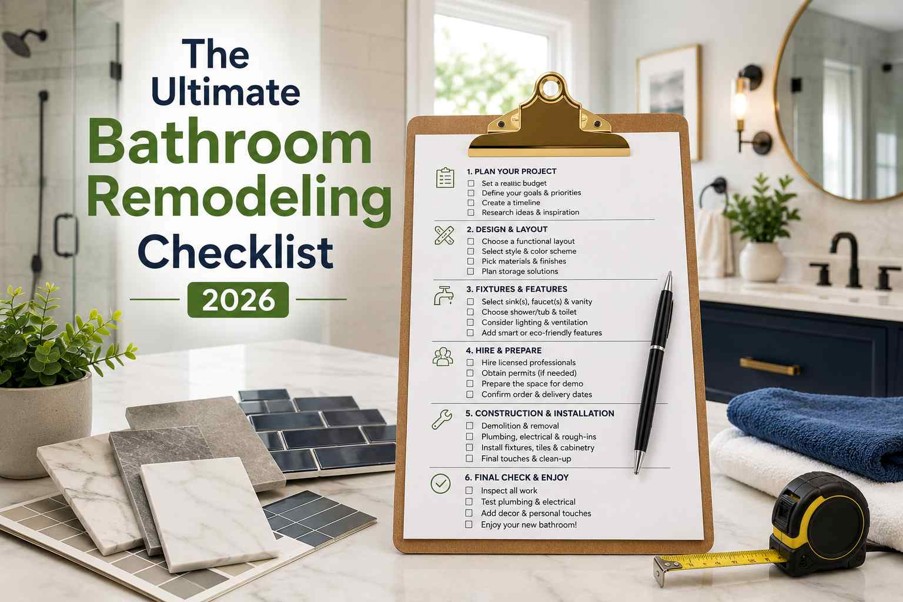
Planning a bathroom remodel is exciting, but it also comes with dozens of decisions that can affect your budget, timeline, and long-term satisfaction. From choosing the right materials to coordinating plumbing and electrical work, every step matters.
Whether you’re updating a guest bathroom or creating a luxurious primary suite, following a structured Bathroom Remodeling Checklist 2026 can help you avoid costly mistakes and keep your project on track.
At Creative Design Ceramic Tile & Bath, we’ve worked with homeowners on bathroom remodeling projects of all sizes. One thing we’ve consistently learned is that successful remodels don’t begin with demolition—they begin with thoughtful planning. A clear plan helps reduce delays, controls costs, and ensures every design choice supports your lifestyle.
Quick Answer: How to Plan a Bathroom Remodel in 2026
If you’re wondering how to plan a bathroom remodel in 2026, follow these essential steps:
- Define your remodeling goals.
- Create a realistic budget.
- Finalize the bathroom layout.
- Choose durable materials and fixtures.
- Hire an experienced contractor.
- Confirm permits and inspections.
- Order materials before demolition.
- Complete a final pre-construction review.
Following these steps helps create a smoother remodeling experience while minimizing unexpected expenses.
Why Every Bathroom Remodel Needs a Checklist
Unlike many home improvement projects, a bathroom remodel combines plumbing, electrical work, waterproofing, ventilation, cabinetry, flooring, and finish materials within one compact space. Because so many systems work together, overlooking a single detail can create expensive problems later.
A detailed checklist helps you:
- Stay organized throughout the project
- Establish realistic expectations
- Keep spending under control
- Reduce construction delays
- Improve communication with your contractor
- Protect the long-term value of your investment
From our experience, homeowners who finalize decisions before construction begins are far less likely to encounter change orders, scheduling issues, or budget overruns.
Step 1: Define Your Remodeling Goals
Every successful remodel begins with a clear purpose.
Ask yourself:
- Are you improving functionality?
- Do you need more storage?
- Is accessibility becoming important?
- Are you remodeling for resale or long-term living?
- Do you want a modern update or a timeless design?
Having clear priorities makes every decision—from layout to fixture selection—much easier.
Step 2: Start Bathroom Remodeling Cost Planning
Effective bathroom remodeling cost planning is one of the most important parts of the project.
Rather than focusing only on the total price, understand where your investment will go.
| Category | Typical Budget Allocation |
| Labor | 35–40% |
| Materials | 30–35% |
| Cabinetry & Storage | 15–20% |
| Permits & Contingency | 10–15% |
Many homeowners are surprised to discover hidden water damage, outdated plumbing, or electrical issues after demolition begins—especially in older homes. Setting aside a contingency fund of 10–15% helps cover unexpected repairs without disrupting the project.
Professional remodeling companies also recommend ordering custom products early since specialty vanities, tile, and fixtures often require several weeks for delivery.
Step 3: Design a Functional Layout
One of the most important things to consider before remodeling a bathroom is whether your existing layout truly works for your daily routine.
Moving plumbing lines can increase labor costs significantly, so it’s worth evaluating whether your current layout can be improved without relocating major fixtures.
When planning your space, consider:
- Door clearance
- Vanity dimensions
- Toilet spacing
- Shower entry
- Storage requirements
- Electrical outlet locations
- Lighting placement
Taking accurate measurements before purchasing materials helps prevent costly adjustments later.
Step 4: Select Materials Built to Last
Bathrooms are exposed to constant moisture and daily wear, making material selection especially important.
Experienced remodelers commonly recommend:
- Porcelain tile for floors because it’s highly water-resistant and durable
- Mold-resistant drywall in damp areas
- Waterproof backer board behind tiled walls
- Quality grout and waterproofing systems for showers
For bathroom countertops, quartz continues to be one of the most popular choices because it’s non-porous, easy to maintain, and resistant to staining. Natural stone offers beautiful character but generally requires more maintenance to preserve its appearance.
Choosing durable materials today helps reduce maintenance and replacement costs in the future.
Step 5: Choose Fixtures That Support Your Lifestyle
Your fixtures should complement how you use your bathroom every day—not simply reflect current design trends.
Popular upgrades include:
- Walk-in showers
- Comfort-height toilets
- Double vanities
- Built-in shower niches
- Rainfall showerheads
- Heated flooring
- Touchless faucets
If water efficiency is a priority, look for fixtures designed to reduce water consumption without compromising performance.
Step 6: Don’t Overlook Lighting, Ventilation, and Storage
These three elements often have the greatest impact on everyday comfort.
A well-designed bathroom should include:
Layered Lighting
Combine task lighting around mirrors with ambient ceiling lighting and accent lighting for a balanced space.
Proper Ventilation
An appropriately sized exhaust fan helps remove excess moisture, reducing the risk of mold while protecting paint, cabinetry, and finishes.
Smart Storage
Well-planned storage keeps the room organized and clutter-free. Recessed shelving, drawer organizers, tall linen cabinets, and built-in niches all improve functionality without sacrificing style.
Step 7: Hire the Right Bathroom Remodeling Contractor
Selecting an experienced bathroom remodeling contractor is one of the most important decisions you’ll make.
Before signing a contract, verify:
- Proper licensing
- Insurance coverage
- Recent project references
- Written project timeline
- Warranty information
- Payment schedule
During consultations, ask how the contractor handles unexpected issues behind walls or beneath flooring. Experienced professionals typically have a clear process for resolving these challenges while keeping the project moving.
Bathroom Remodel Checklist for Small Bathrooms
A compact bathroom can still feel spacious with thoughtful planning.
This bathroom remodel checklist for small bathrooms can help maximize both function and style:
- Use floating vanities to create more visible floor space.
- Install large mirrors to reflect natural light.
- Choose light, neutral finishes.
- Incorporate recessed storage wherever possible.
- Select frameless glass shower doors instead of curtains.
- Use large-format tiles to reduce visual clutter.
Small improvements often make a significant difference without increasing the room’s footprint.
Common Bathroom Remodeling Mistakes to Avoid
Even well-planned projects can encounter problems when important details are overlooked.
Some of the most common mistakes include:
- Beginning demolition before finalizing selections
- Underestimating the overall budget
- Choosing style over long-term functionality
- Skipping waterproofing systems
- Ordering materials too late
- Ignoring ventilation requirements
We’ve also seen homeowners delay projects because specialty fixtures weren’t ordered early enough. Confirming product availability before demolition can prevent unnecessary downtime.
Bathroom Remodeling Inspection Checklist
Before construction begins, review this bathroom remodeling inspection checklist with your contractor.
Confirm that:
✔ Remodeling goals are finalized.
✔ Measurements have been verified.
✔ Materials have been ordered.
✔ Plumbing and electrical plans are approved.
✔ Required permits have been secured.
✔ Waterproofing methods have been discussed.
✔ Construction schedule has been confirmed.
✔ Final design selections have been approved.
Taking time to review these items before demolition helps reduce delays and costly changes during construction.
What to Do Before Remodeling Your Bathroom
Many homeowners ask what to do before remodeling your bathroom once they’ve selected a contractor.
Preparing your home ahead of time makes the remodeling process much smoother.
Before work begins:
- Remove personal belongings.
- Protect nearby furniture and flooring.
- Set up an alternative bathroom if necessary.
- Confirm product delivery dates.
- Review the construction schedule.
- Discuss daily site access with your contractor.
Good preparation allows your remodeling team to begin work efficiently while minimizing disruptions to your household.
Final Thoughts
A successful bathroom remodel isn’t determined by expensive finishes alone—it’s built on careful planning, realistic budgeting, quality materials, and experienced craftsmanship. Taking time to organize your project before demolition helps reduce stress, avoid unnecessary expenses, and create a bathroom that serves your family well for years to come.
If you’re ready to transform your space, Creative Design Ceramic Tile & Bath provides professional bathroom remodeling services throughout Suffolk County. Whether you’re refreshing a small guest bathroom or planning a complete luxury remodel, our team can guide you through every stage of the process—from design and material selection to installation and the final walkthrough.
Frequently Asked Questions
Q1: How do I plan a bathroom remodel in 2026?
Start by identifying your goals, establishing a realistic budget, finalizing the layout, selecting durable materials, hiring a qualified contractor, and confirming permits before demolition begins.
Q2: What should I budget for a bathroom remodel?
Every project is different, but homeowners should plan for labor, materials, permits, and a contingency fund of 10–15% for unexpected repairs.
Q3: What are the best materials for bathroom countertops?
Quartz is one of the most popular options because it resists moisture, stains, and scratches while requiring very little maintenance.
Q4: What mistakes should I avoid?
Avoid skipping waterproofing, changing the design after construction begins, underestimating your budget, or delaying material orders.
Q5: Why should I hire a professional contractor?
An experienced contractor helps coordinate every stage of the project, ensures work meets local building requirements, manages subcontractors, and delivers a finished bathroom that’s both beautiful and functional.