
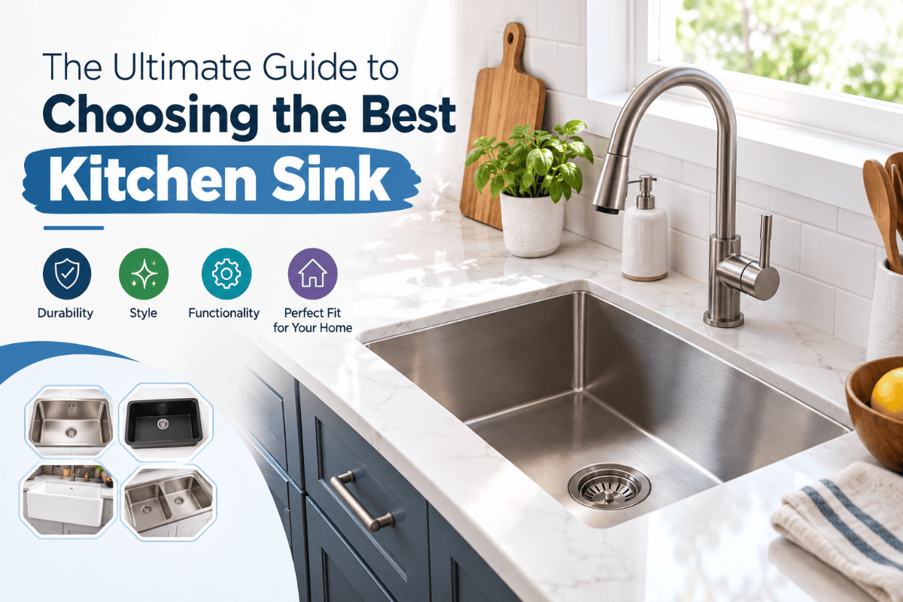
You use your sink more than almost any other spot in your home. It handles greasy pans, fresh produce, and late-night cleanups. The wrong one gets annoying fast. The right one makes every meal easier, quietly.
Here is the good news. Finding the best kitchen sink gets simple once you know what to look for. We have guided plenty of homeowners through this choice. Think of this guide as advice from a friend who has seen it all.
Start With Your Space, Not Your Style
Style matters, but your kitchen’s layout comes first. In our experience, even gorgeous sinks fail when they do not fit. We have watched homeowners return beautiful sinks because the cabinet was too small. A little upfront measuring prevents that headache. Let’s walk through the basics together.
Four Simple Steps for a Smart Choice
If you wonder how to choose a kitchen sink, follow these four steps.
- Measure your base cabinet width. A 33-inch sink, for example, needs a 36-inch cabinet.
- Check your countertop. Stone and solid surfaces work with most sink styles, while laminate usually calls for a drop-in sink.
- Think about your routine. Do you cook big meals or mostly reheat? Do you wash by hand or use a dishwasher?
- Set a full budget. Count installation and accessories, not only the sink price.
What Your Sink Is Made Of Matters
The kitchen sink materials you pick shape how your sink looks, sounds, and ages. Here are the main options, with our honest take on each.
- Stainless steel: It is affordable and easy to find. A lower gauge means thicker steel, so 16 gauge beats 18 gauge. Thicker steel is quieter and resists dents.
- Granite composite: It is made from crushed stone and resin. It handles scratches and heat well. The matte finish also hides water spots.
- Fireclay: This is clay fired at high heat with a glossy glaze. It resists stains, but it is heavy and costs more.
- Cast iron: This is iron coated with enamel. It looks classic, but hard hits can chip the coating.
- Copper: It develops a rich patina over time. It needs more care, so it suits people who love character.
Read More :- What Does a Luxury Kitchen Remodel Cost on Long Island?
Bowl Layout and Depth
The single bowl vs double bowl kitchen sink debate comes down to your habits. A single bowl gives you one wide space for big pots and baking sheets. A double bowl lets you wash on one side and rinse on the other. Depth matters too. Most sinks run 8 to 10 inches deep. Deeper bowls hold more dishes, but they can strain the back of a shorter cook.
A Smart Setup for Busy Households
For the best kitchen sink for a busy family kitchen, we lean toward a deep single bowl. Granite composite and 16-gauge stainless steel both handle daily wear with ease. Add built-in ledges, and your cutting boards and colanders slide right over the bowl. This setup keeps counters clear during the dinner rush. It also gives kids and adults room to help without bumping elbows.
How Your Sink Sits in the Counter
The undermount vs. drop-in kitchen sink choice changes both looks and cleanup. An undermount sink mounts below the counter edge. You can sweep crumbs straight into the bowl, and the line looks clean and modern.
A drop-in sink rests on top with a visible rim. It costs less to install and suits more countertop types. Farmhouse apron sinks are a third option, with an exposed front panel and a deeper bowl. They often need a specially sized cabinet.
Planning for a Smooth Install
Good planning makes kitchen sink installation go smoothly. Start with cabinet strength, because heavy fireclay and cast iron need extra support. Next, check your plumbing and garbage disposal clearance. Deeper bowls may need longer drain parts.
Undermount and farmhouse styles usually call for a professional. The countertop cutout must be exact. A small error can leave gaps or weak spots.
Fit Your Sink Into the Bigger Plan
If you are planning kitchen remodeling, choose your sink early. Its size affects your cabinet layout and countertop cutouts. Your kitchen countertop installer will also need exact sink details before cutting stone. Order the sink first, then share the spec sheet or template. This one step prevents costly surprises. It also keeps your project on schedule.
Three Mistakes We See Often
- Buying before measuring: A sink that is too wide can force expensive cabinet changes.
- Ignoring weight: Heavy sinks need strong support, or the cabinet may sag over time.
Picking looks over daily use: A shallow, sleek sink may feel cramped on a busy night.
Ready to Choose Your Perfect Sink With Confidence?
Choosing the best kitchen sink should feel exciting, not stressful. If you are planning kitchen remodeling in Suffolk County, we would love to help. At Creative Design Ceramic Tile & Bath, we help you plan a kitchen where your sink, tile, and finishes work together. Reach out to us today, and let’s build a kitchen you will love for years.
Frequently Asked Questions
Q1: What is the best material for a kitchen sink?
Stainless steel, granite composite, and fireclay top the list. Stainless offers value, composite resists scratches, and fireclay gives a classic look. Your budget, cleaning habits, and cabinet strength should guide the final pick.
Q2: Is a single bowl or double bowl sink better for everyday use?
It depends on your habits. A single bowl suits big pots and trays. A double bowl helps when you wash and rinse at once. Most busy cooks prefer the open space of a single bowl.
Q3: What size kitchen sink should I choose?
Most kitchen sinks are 25 to 36 inches wide. Measure your base cabinet first, then leave a few inches for the cabinet walls. Always check the spec sheet before you order.
Q4: What is the difference between an undermount and a drop-in sink?
An undermount sits below the countertop for a smooth edge. A drop-in rests on top with a visible rim. Undermount sinks need solid countertops like stone, while drop-in sinks work with most surfaces, including laminate.
Q5: How do I match a kitchen sink with my countertop and cabinets?
Choose a sink style your countertop can support. Match the sink finish to your faucet and hardware. Then confirm the cabinet width and strength fit the sink’s size and weight.