
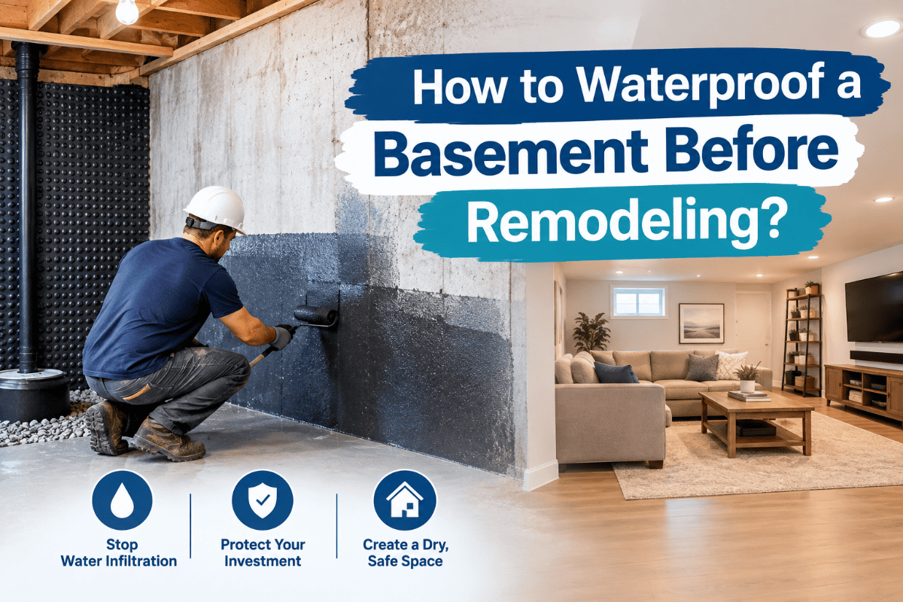
Nothing ruins a beautiful new basement faster than water seeping in through the walls. One bad storm can destroy drywall, flooring, and months of hard work in a single night. That is why basement waterproofing before remodeling should always come first, not as an afterthought once construction is already underway.
Waterproof First vs. Skip It: The Real Impact
Seeing the difference side by side makes the stakes much clearer. Here is what typically happens to a basement remodel with waterproofing, compared to one without it.
| Impact Area | Basement Waterproofed First | Basement Left Untreated |
|---|---|---|
| Drywall and insulation | Stays dry and intact for decades | Often soaks through and needs full replacement |
| Mold and mildew risk | Kept low with drainage and dehumidifier | High, especially in humid summer months |
| Flooring lifespan | Protected by vapor barrier, lasts for years | Warps, buckles, or grows mold underneath |
| Repair costs down the road | Minimal, since moisture is controlled early | Often thousands of dollars to rip out and rebuild |
| Resale and home value | Adds usable, trusted living space | Can scare off buyers during inspection |
| Storm and flood resilience | Sump pump and backup system handle heavy rain | Basement floods, ruining the new finish |
| Air quality | Stays fresh, no musty odor | Musty smell and higher humidity indoors |
Read More :- Top 10 Summertime Home Renovations to Elevate Your Space
Why Moisture Control Has to Happen First
Concrete basement walls are porous, which means they soak up moisture from the soil outside like a sponge. Even without a visible flood, this moisture builds up slowly behind your walls over time. Once you add drywall, insulation, and flooring on top of a damp foundation, you trap that moisture exactly where it can do the most harm.
Repairing a finished basement after water damage is expensive. Crews often need to tear out soaked drywall, ruined insulation, and damaged flooring just to fix the moisture problem hiding underneath. Getting basement moisture prevention right before construction begins saves you from repeating that work later.
Spotting the Warning Signs Early
A few signs usually show up before a basement floods outright. Musty smells are often the first clue, even when there is no standing water in sight. White, chalky residue on your walls, known as efflorescence, means moisture is already passing through your concrete.
Cracks in the walls or floor, peeling paint, and rust on metal fixtures all point to a hidden moisture problem. If you spot any of these, do not cover them with paint or new flooring. Bring in an experienced basement remodeling contractor to inspect the space before your remodel goes any further.
The Waterproofing Process, Step by Step
A proper waterproofing plan usually follows a clear order, starting with the biggest risks first.
1. Start with an interior drainage system
This system runs along the base of your basement walls and catches water before it spreads across your floor. Installing it before you finish your basement is far easier than cutting into finished walls later.
2. Add a sump pump to move that water out
Your drainage system needs somewhere to send the water it collects. A solid sump pump setup includes a battery backup for power outages, plus a second pump and alarm in case the main one fails.
3. Seal the walls with a vapor barrier
Since concrete naturally absorbs moisture, a vapor barrier stops water vapor from soaking into your new walls. It channels moisture down into your drainage system instead of letting it sit behind your drywall.
4. Protect the floor too
Moisture does not only come through the walls. It can rise up through your concrete slab as well, so any flooring that can be damaged by dampness needs its own vapor barrier underneath.
5. Run a dehumidifier year-round
Even a well-sealed basement can build up humidity over time. A ducted dehumidifier keeps the air dry automatically, which helps prevent mold and that musty basement smell for good.
6. Handle your gutters and grading outside
A single inch of rain can dump around 500 gallons of water onto an average roof. Clogged gutters or short downspouts send that water pooling right next to your foundation, so keep them clear and make sure soil slopes away from your home.
7. Check your plumbing too
Interior flooding does not always come from groundwater. Old washing machine hoses can burst just as easily, so swapping in heavy duty hoses is a small step that prevents a costly surprise.
Together, these steps form the most reliable basement waterproofing solutions available for a remodel, since each one addresses a different way water can find its way in.
Choosing Between Interior and Exterior Methods
When homeowners weigh interior vs exterior basement waterproofing, they are really choosing between two different approaches to the same problem. Exterior waterproofing involves digging around your foundation to apply sealants or membranes directly to the outside walls. It stops water before it reaches your foundation at all, but it requires excavation and a much bigger budget.
Interior waterproofing, like drainage systems and sump pumps, manages water after it reaches the soil near your foundation. It costs less, causes far less disruption to your yard, and fits naturally into most basement finishing timelines. For this reason, interior systems are usually the starting point most contractors recommend.
What Actually Works Best
The best way to waterproof a basement before renovation is rarely just one product or fix. A combination approach tends to perform best: an interior drainage system paired with a sump pump, a wall vapor barrier, and solid exterior grading.
This layered strategy covers your basement from multiple angles. The drainage system catches water at its source, the sump pump removes it, and the vapor barrier protects your finished walls from any moisture still trapped in the concrete itself. Among all basement waterproofing methods before renovation, this combination consistently delivers the most reliable, long-term protection.
If you are wondering exactly how to stop basement water seepage before renovation, the answer usually starts outside your home. Clean gutters, properly extended downspouts, and soil graded away from your foundation prevent a huge share of seepage problems before they ever begin. Pair that with interior drainage, and you have covered the two biggest sources of basement moisture.
Why This Step Cannot Be Skipped
Finishing over untreated walls does not solve a moisture problem. It just hides it, often without any warning sign until real damage has already happened. A properly planned basement finish remodel always treats waterproofing as the foundation of the entire project, not an optional add-on.
Getting this right protects your investment for decades, not just until the next heavy storm. It is far easier, and far cheaper, to prepare a basement properly than to repair one after the fact.
Ready to Build on a Dry, Protected Foundation?
We have seen too many finished basements ruined by water damage that could have been prevented with the right prep work upfront. If you are planning a basement remodel, our team at Creative Design Ceramic Tile & Bath can help you get the waterproofing right before we build anything on top of it. Reach out today, and let’s create a basement that stays beautiful and dry for years to come.
Frequently Asked Questions
Q1: Why should I waterproof my basement before remodeling?
Waterproofing first protects your new walls, flooring, and insulation from hidden moisture damage. Skipping this step often leads to expensive repairs after your remodel is finished.
Q2: What are the signs that a basement needs waterproofing before renovation?
Musty smells, white chalky residue on walls, visible cracks, and peeling paint all signal moisture problems. Address these before starting any remodeling work.
Q3: How do I waterproof a basement before remodeling?
Install an interior drainage system, add a sump pump, seal walls with a vapor barrier, and manage exterior grading and gutters. These steps work together to keep your basement dry.
Q4: What is the best basement waterproofing method before renovation?
A combination of interior drainage, a sump pump, and a wall vapor barrier works best for most homes. This layered approach protects against multiple moisture sources at once.
Q5: Should basement walls be waterproofed before finishing them?
Yes. Finishing over untreated walls traps moisture behind your drywall, which often leads to mold and hidden damage over time.