
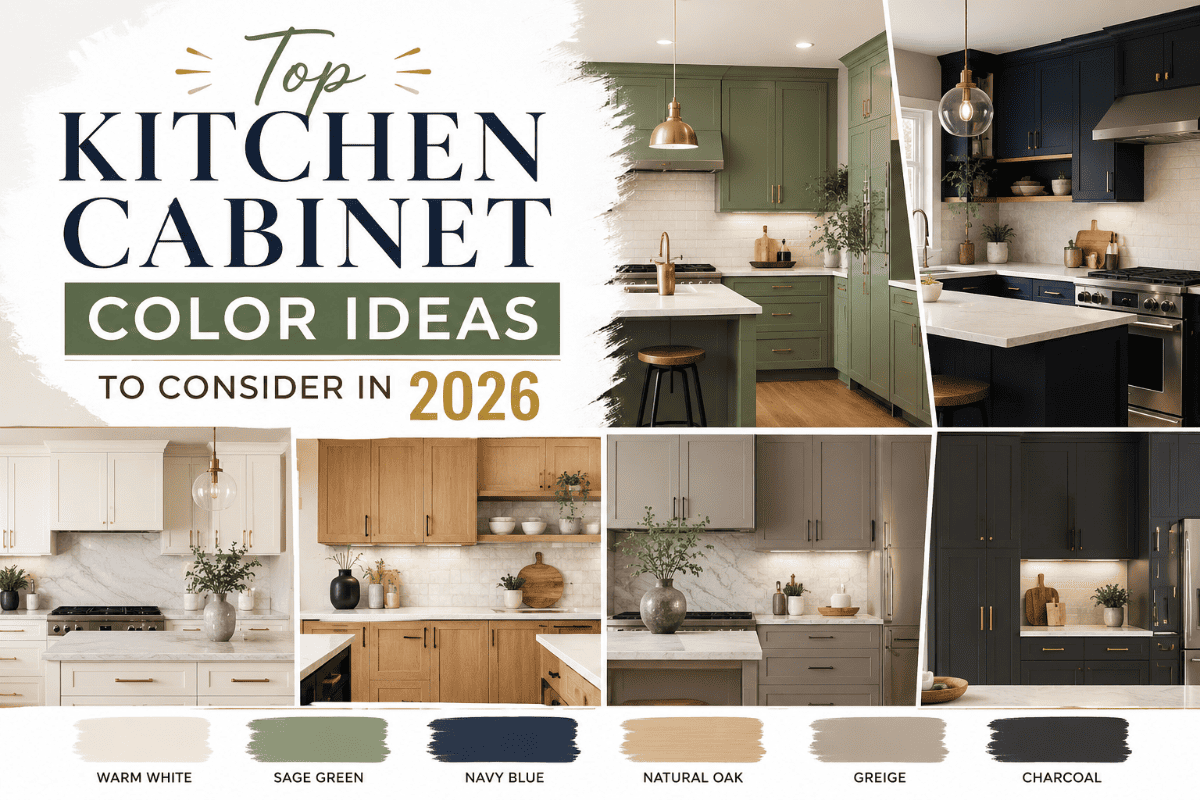
The best kitchen cabinet color ideas 2026 include warm white, mushroom, taupe, sage green, navy blue, and natural wood finishes such as oak and walnut. These colors balance modern style with timeless appeal and work across different kitchen sizes, design preferences, and countertop materials. The right cabinet color depends on your kitchen’s natural light, flooring, countertops, and overall design. Choosing these elements together helps create a cohesive kitchen that remains attractive and functional for years.
Whether you are updating existing cabinets or planning a complete remodel, the right color can transform your kitchen without requiring a change to every surface. From warm neutral kitchen cabinets to bold accent islands and natural wood finishes, there are options for traditional, contemporary, farmhouse, and minimalist interiors.
Why Kitchen Cabinet Colors Matter
Kitchen cabinets are among the largest visual elements in a kitchen. Their color influences how spacious the room feels, how natural light reflects, and how well the countertops, backsplash, flooring, and hardware work together.
Well-chosen kitchen cabinet paint colors can help you:
- Make a small kitchen feel brighter and more open.
- Add warmth, contrast, and personality.
- Complement countertops, flooring, and backsplash materials.
- Create a consistent look across different design styles.
- Support a timeless appearance that adapts to changing décor.
Cabinet color should not be selected in isolation. Consider your kitchen’s lighting, cabinet style, countertop undertones, and maintenance requirements before making a decision. An experienced kitchen remodeling company can help coordinate cabinetry with the rest of your kitchen design.
Top Kitchen Cabinet Color Ideas to Consider in 2026
The best kitchen cabinet colors combine versatility with personal style. Warm neutrals, earthy greens, natural wood, and carefully selected darker shades provide a range of options for homeowners planning a kitchen update.
| Cabinet Color | Best For | Recommended Pairings |
|---|---|---|
| Warm White | Bright, timeless kitchens | White quartz, marble, brass hardware |
| Beige and Mushroom | Warm, contemporary spaces | Cream stone, natural wood |
| Sage and Olive Green | Nature-inspired kitchens | White countertops, oak accents |
| Navy Blue | Kitchen islands and accent cabinets | White quartz, brass hardware |
| Gray and Charcoal | Modern kitchens | Light stone, pale wood |
| Natural Oak and Walnut | Organic, warm interiors | Cream countertops, matte black hardware |
| Black | Contemporary, high-contrast designs | White stone, warm wood |
| Burgundy and Deep Red | Statement kitchens | Warm white, natural wood |
These cabinet color ideas for kitchen remodeling projects can be adapted to different budgets, room sizes, and design preferences. Rather than applying a bold shade everywhere, consider using a lighter color on upper cabinets and a darker finish on lower cabinets or the island.
1. Warm White Kitchen Cabinets for a Timeless Look
Warm white is one of the most versatile choices for homeowners who want a bright, welcoming kitchen. Unlike stark white, warmer shades can complement cream walls, natural wood, brass hardware, and countertops with beige or gold undertones.
White kitchen cabinets work particularly well in traditional, transitional, and contemporary interiors. They also provide flexibility if you decide to change your backsplash, wall color, or decorative accessories later.
Best combinations:
- Warm white cabinets with white quartz countertops.
- White shaker cabinets with brushed brass hardware.
- Creamy white cabinetry with oak flooring.
- White cabinets with marble-look backsplashes.
White cabinetry can also be a practical option when planning a long-term remodel because it coordinates with many materials. However, the right shade should match your countertop undertones and available lighting.
2. Beige, Mushroom, and Taupe for Warm Neutral Kitchens
Warm neutral kitchen cabinets are an excellent option if you want something softer than white without introducing a strong color.
Mushroom combines beige and gray undertones, while taupe can range from warm brown-gray to cooler neutral shades. These finishes create depth and can make a kitchen feel comfortable without appearing overly traditional.
They work especially well in transitional kitchens, where contemporary fixtures meet natural materials and classic cabinet designs.
Best combinations:
- Mushroom cabinets with beige quartz countertops.
- Taupe cabinets with cream backsplashes.
- Beige shaker cabinets with dark hardware.
- Warm neutral cabinets with walnut accents.
When comparing samples, look at the cabinet finish beside the actual countertop and flooring. Even small differences in undertones can affect how the completed kitchen looks.
3. Sage and Olive Green Kitchen Cabinets
Green kitchen cabinets introduce color while maintaining a connection to natural materials. Sage green provides a muted, understated appearance, while olive and forest green create a deeper visual effect.
These shades work well in farmhouse, transitional, and contemporary kitchens. Lighter green cabinets can suit smaller spaces, while darker green finishes can create a striking kitchen island or focal point.
Best combinations:
- Sage green cabinets with white quartz.
- Olive green cabinetry with warm brass hardware.
- Green shaker cabinets with oak shelving.
- Deep green islands with warm white perimeter cabinets.
Before choosing a shade, test samples under natural and artificial light. Green undertones can appear noticeably different throughout the day.
4. Navy Blue Kitchen Cabinets for Contrast
Navy blue remains a useful choice for homeowners who want a distinctive cabinet color without committing to black. It creates contrast against light countertops and can add depth to a kitchen island or lower cabinetry.
Navy works especially well in transitional and contemporary interiors. In a small kitchen, using it selectively can help maintain a balanced appearance.
Best combinations:
- Navy cabinets with white quartz countertops.
- Blue shaker cabinets with brushed brass hardware.
- Navy islands with warm white upper cabinets.
- Deep blue cabinets with light oak flooring.
If your kitchen receives limited natural light, consider using lighter wall colors and suitable task lighting to prevent the darker cabinetry from dominating the space.
5. Natural Oak and Walnut Cabinets for Organic Warmth
Natural wood is an alternative to painted cabinetry when you want warmth, grain, and texture. Light oak creates a bright, relaxed appearance, while walnut adds deeper brown tones and a more dramatic finish.
These materials complement contemporary, minimalist, traditional, and organic-inspired kitchen designs.
Best combinations:
- White oak cabinets with cream countertops.
- Walnut cabinetry with white stone surfaces.
- Natural wood cabinets with matte black hardware.
- Oak lower cabinets with warm white upper cabinets.
The final appearance depends on the wood species, grain pattern, stain, and protective finish. Review the actual material sample rather than relying solely on online photographs.
6. Gray, Charcoal, and Black for Modern Kitchens
Gray kitchen cabinets offer a clean, understated appearance, while charcoal and black create a stronger contrast. These shades work well in contemporary kitchens with simple cabinet profiles, streamlined hardware, and light countertops.
Soft gray can complement white and pale stone surfaces, while charcoal works particularly well with natural wood accents. Black cabinets can create a dramatic effect in larger or well-lit spaces.
Best combinations:
- Soft gray cabinets with white quartz.
- Charcoal lower cabinets with pale wood upper cabinets.
- Black cabinetry with warm oak shelving.
- Gray shaker cabinets with brushed nickel hardware.
Dark finishes can make a poorly lit kitchen feel smaller, so consider balancing them with lighter surfaces and layered lighting.
7. Burgundy and Deep Red for Statement Cabinetry
Burgundy and deeper red shades offer an alternative to conventional neutral cabinetry. They can introduce richness and personality when used on an island, pantry wall, or selected lower cabinets.
These colors work best when the surrounding finishes remain relatively simple. Warm white countertops, natural wood, and understated hardware can help maintain balance.
If you prefer a more flexible design, use a deeper red as an accent rather than applying it throughout the entire kitchen.
What Is the Most Popular Cabinet Color in 2026?
If you are asking what is the most popular cabinet color in 2026, there is no single shade that suits every kitchen or homeowner. Warm white, mushroom, taupe, sage green, and natural wood are versatile options, while navy, charcoal, and burgundy provide opportunities for stronger contrast.
The best cabinet color depends on your preferred style, natural light, countertop material, and long-term plans for the home.
For homeowners who prefer timeless kitchen cabinet colors, warm white, soft neutrals, and natural wood offer considerable flexibility. Those looking for a more contemporary appearance may prefer muted green, deep blue, or two-tone combinations.
Instead of choosing a color solely because it is trending, evaluate how it will work with the rest of your kitchen and whether you will be comfortable with it for years to come.
Kitchen Cabinet Color Ideas for Small Kitchens
When exploring kitchen cabinet color ideas for small kitchens, consider how the cabinet color interacts with natural light, wall colors, and countertop finishes.
Lighter shades can help a compact kitchen feel more open, particularly when combined with suitable lighting and a coordinated backsplash. However, a small kitchen does not have to be entirely white.
Consider these options:
- Warm white: Creates a bright, flexible foundation.
- Cream: Adds warmth without strong contrast.
- Pale gray: Provides a subtle contemporary finish.
- Light sage: Introduces color without overwhelming the room.
- Light oak: Adds natural texture and warmth.
You can also introduce contrast through hardware, shelving, or a kitchen island. Under-cabinet lighting helps illuminate work surfaces and highlights the countertop.
Kitchen Cabinet Colors for White Countertops
The best kitchen cabinet colors for white countertops depend on whether the countertop has cool gray veining, warm beige markings, or a more uniform white appearance.
Here are several combinations to consider:
- Navy blue cabinets: Create strong contrast against white surfaces.
- Sage green cabinets: Introduce a soft, nature-inspired color.
- Walnut cabinets: Add warmth and natural grain.
- Warm white cabinets: Create a light, coordinated appearance.
- Charcoal cabinets: Provide a modern, high-contrast finish.
- Beige cabinets: Create a softer palette with warm undertones.
When selecting a combination, compare cabinet samples against the actual countertop. A white surface with warm undertones may pair better with cream or taupe than with a cool gray cabinet finish.
Kitchen Cabinet Colors for Quartz Countertops
When choosing kitchen cabinet colors for quartz countertops, consider the countertop’s base color, veining, and undertones. Quartz comes in a wide range of patterns, so the right cabinet finish should complement the specific surface.
Use these combinations as a starting point:
- White quartz: Works with navy, sage, walnut, charcoal, and warm white cabinets.
- Beige quartz: Pairs well with mushroom, taupe, cream, and natural oak.
- Gray-veined quartz: Can complement soft gray, white, navy, or charcoal cabinetry.
- Warm-veined quartz: Often works well with walnut, mushroom, and warm white finishes.
Bring cabinet samples into your kitchen and view them beside the actual quartz sample under natural and artificial light. This helps identify undertone clashes before installation.
For help coordinating surfaces and cabinetry, explore our kitchen countertop installation services in Suffolk County.
Kitchen Cabinet Color Trends for Luxury Kitchens
The most effective kitchen cabinet color trends for luxury kitchens focus on material quality, coordinated finishes, and thoughtful contrast rather than color alone.
Consider these design approaches:
- White oak cabinetry: Adds natural grain and understated warmth.
- Rich walnut finishes: Create depth and distinctive wood texture.
- Deep green cabinets: Introduce color while complementing natural materials.
- Navy islands: Add contrast without making every cabinet dark.
- Warm white perimeter cabinets: Keep the main kitchen visually bright.
- Two-tone cabinetry: Combines contrasting colors or finishes to define different areas.
For luxury and open-concept kitchens, consider how the cabinet color relates to adjacent living and dining spaces. Repeating wood tones, hardware finishes, or complementary neutral shades can help create a consistent visual flow.
A luxury appearance does not necessarily require the darkest or most expensive-looking shade. Careful coordination between cabinets, countertops, lighting, flooring, and hardware is what creates a cohesive result.
Are Two-Tone Kitchen Cabinets a Good Choice?
Two-tone kitchen cabinets combine two colors or finishes within the same design. A common approach is to use a lighter shade on upper cabinets and a darker color on lower cabinets or the island.
For example, warm white upper cabinets can balance navy lower cabinets, while oak cabinetry can complement a muted green island. These kitchen cabinet color combinations create visual interest without requiring every cabinet to use a bold shade.
To maintain balance:
- Choose colors with compatible undertones.
- Use one dominant color and one supporting shade.
- Repeat at least one finish elsewhere in the kitchen.
- Avoid introducing too many unrelated colors or hardware finishes.
Two-tone designs are particularly useful when you want to introduce color while maintaining a bright, flexible foundation.
How to Choose the Right Kitchen Cabinet Paint Colors
Selecting kitchen cabinet paint colors requires more than choosing a shade you like. Consider the following factors before making your final decision.
1. Evaluate Natural and Artificial Lighting
Cabinet colors can appear warmer, cooler, lighter, or darker depending on the light source. Compare samples in the morning, afternoon, and evening, particularly if your kitchen receives limited daylight.
2. Coordinate Cabinets With Countertops and Flooring
Select major finishes together rather than choosing cabinet paint in isolation. This helps identify undertone differences before they become expensive design problems.
3. Choose a Suitable Finish
Matte and low-sheen finishes can create a softer appearance, while other finishes may be easier to wipe clean depending on the product. Ask about the durability and maintenance requirements of the specific cabinet coating.
4. Consider Long-Term Maintenance
Light and dark cabinets can both show certain types of wear. Consider fingerprints, cooking residue, household activity, cleaning routines, and the manufacturer’s care recommendations.
5. Test Samples Before Committing
Paint chips and digital images cannot fully reproduce the appearance of finished cabinetry. Review larger samples against your actual countertop, flooring, and backsplash before approving the final color.
Should You Repaint or Replace Your Kitchen Cabinets?
Repainting may be a practical option when existing cabinet boxes and doors are in good condition and the layout still meets your needs. Proper preparation and a suitable cabinet coating are important for achieving a durable finish.
Replacement may be more appropriate when cabinets have structural damage, insufficient storage, unsuitable dimensions, or a layout that no longer works for your household.
Professional kitchen cabinet installation also provides an opportunity to improve storage, introduce modern drawer systems, and coordinate cabinetry with new countertops and appliances.
For homeowners planning custom kitchen cabinets in Suffolk County, the decision should account for cabinet condition, storage requirements, design preferences, and the overall remodeling budget.
If you are planning a larger update, explore our custom kitchen remodeling service to coordinate cabinet colors, materials, storage, and layout as part of one overall plan.
Plan Your Kitchen Cabinet Update
Choosing the right cabinet color is an important step in creating a kitchen that looks cohesive and works for your daily routine. Warm neutrals, nature-inspired greens, natural wood, and carefully selected accent colors all offer ways to personalize your space.
Creative Design Home Remodeling helps homeowners plan kitchen remodeling projects, cabinetry, and countertop updates. If you are considering a kitchen update in Long Island or Suffolk County, explore our kitchen remodeling services to learn more about coordinating your design, materials, and layout.
4. What kitchen cabinet colors work well with quartz countertops?
Warm white, taupe, sage green, walnut, and navy can work with quartz, depending on its color and veining. Compare cabinet samples against the actual quartz surface before making a final decision.
5. Are dark kitchen cabinets still a good choice in 2026?
Yes. Navy, charcoal, and deep green can create a sophisticated appearance. They work particularly well when balanced with lighter countertops, suitable lighting, and natural materials.
6. Are two-tone kitchen cabinets still in style?
Two-tone cabinetry is a flexible design option. Combining lighter upper cabinets with darker lower cabinets or an accent island adds contrast and allows homeowners to introduce color without overwhelming the space.
Frequently Asked Questions
Q1: What is the most popular cabinet color in 2026?
Warm white, mushroom, taupe, sage green, and natural wood are versatile options for a range of kitchen styles. Deeper shades such as navy and burgundy can also work well as accents. The best choice depends on lighting, countertops, and the appearance you want to achieve.
Q2: Which cabinet colors add the most resale value?
Neutral colors such as warm white, soft gray, and natural wood generally appeal to the widest range of buyers and remain attractive for years.
Q3: What color cabinets work best in a small kitchen?
Warm white, cream, pale gray, light sage, and light oak can help a small kitchen feel brighter. Pair these colors with suitable lighting and coordinated surfaces to maintain an open appearance.
Q4: Do white countertops go with dark cabinets?
Yes. White countertops create beautiful contrast with navy blue, charcoal gray, walnut, and deep green cabinets while maintaining a clean, balanced appearance.
Q5: Should I repaint or replace my cabinets?
Repainting can work when existing cabinets are structurally sound and their layout remains practical. Replacement may be better when cabinets are damaged, lack storage, or need a different configuration.
Q6: What kitchen cabinet colors work well with quartz countertops?
Warm white, taupe, sage green, walnut, and navy can work with quartz, depending on its color and veining. Compare cabinet samples against the actual quartz surface before making a final decision.
Q7: Are dark kitchen cabinets still a good choice in 2026?
Yes. Navy, charcoal, and deep green can create a sophisticated appearance. They work particularly well when balanced with lighter countertops, suitable lighting, and natural materials.
Q8: Are two-tone kitchen cabinets still in style?
Two-tone cabinetry is a flexible design option. Combining lighter upper cabinets with darker lower cabinets or an accent island adds contrast and allows homeowners to introduce color without overwhelming the space.