
Bathroom remodeling is one of the most popular home upgrades. It boosts comfort and adds value fast. Walk-in showers vs. bathtubs is one of the biggest choices homeowners face in this process. More people are ripping out old tubs for sleek, open showers. Others still love a good soak at the end of the day.
Quick Answer
Choosing between a walk-in shower and a bathtub depends on your lifestyle, available space, budget, accessibility needs, and long-term goals. Walk-in showers offer a modern, low-maintenance solution ideal for smaller bathrooms and aging-in-place designs. At the same time, bathtubs provide relaxation, family-friendly functionality, and strong appeal for homes with young children. Understanding the benefits of each option helps homeowners make an informed decision about bathroom remodeling.
Space plays a big role in this choice. So does your daily routine and your family’s needs. Resale value matters too, along with how easy the space is to use. There is no single right answer here. The best pick depends on your home and your life. This guide breaks down both options. You will learn the pros of each, plus key factors to weigh before you decide.
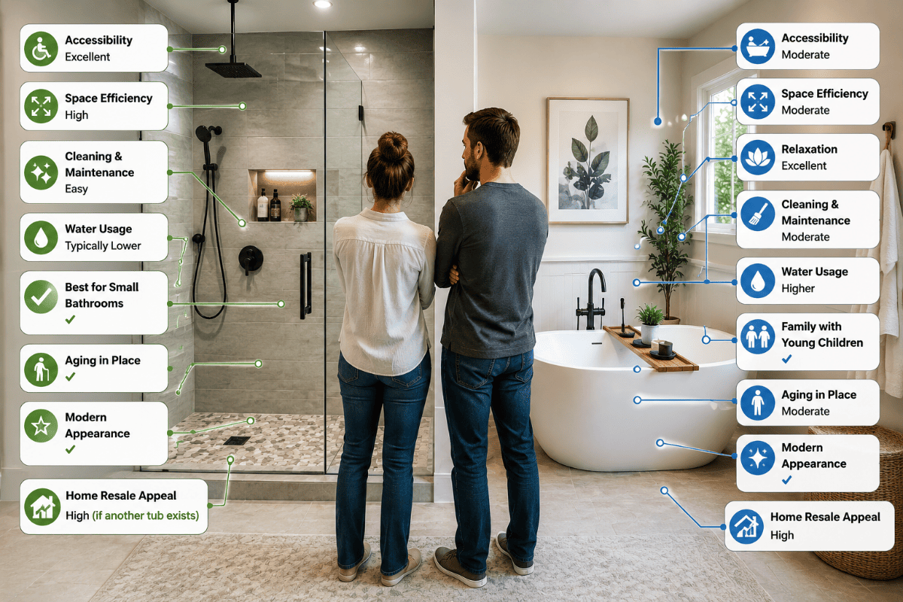
| Feature | Walk-In Shower | Bathtub |
|---|---|---|
| Accessibility | Excellent | Moderate |
| Space Efficiency | High | Moderate |
| Relaxation | Moderate | Excellent |
| Cleaning & Maintenance | Easy | Moderate |
| Water Usage | Typically Lower | Higher |
| Best for Small Bathrooms | ✔ | ✖ |
| Family with Young Children | Moderate | ✔ |
| Aging in Place | ✔ | Moderate |
| Modern Appearance | ✔ | ✔ |
| Home Resale Appeal | High (if another tub exists) | High |
Understanding the Difference Between Walk-In Showers and Bathtubs
A walk-in shower has a curbless or low-lip entry. You step right in, no climbing needed. Some have open layouts. Others use glass panels for a sleek, modern look. A bathtub is an enclosed vessel built for soaking or bathing. Styles range from simple to luxurious. Both options remain popular today, just for different reasons.
Smaller homes and modern renovations often lean toward walk-in showers. Larger primary bathrooms tend to keep a tub, or add both. Each option fits a different kind of household.
Relevant Blog: The Ultimate Bathroom Remodeling Checklist 2026
Benefits of Installing a Walk-In Shower
Modern and Spacious Design
A walk-in shower gives your bathroom an open, contemporary feel. Frameless glass options add to the clean look. Large-format tiles cut down on grout lines, which keeps the space looking sharp. This design can make a small bathroom feel much larger.
Easier Accessibility
Step-free entry makes a walk-in shower a smart pick for seniors. It also helps anyone with mobility concerns. This design supports aging in place and works well for wheelchair access. It also lowers the risk of a fall.
Low Maintenance
Walk-in showers are easier to clean than tubs. There are fewer tight corners to scrub. Many designs skip the glass door entirely, which means no water stains to wipe down. This setup also helps prevent mold when paired with waterproof materials.
Better for Small Bathrooms
A walk-in shower takes up less visual space than a tub. This gives you more layout flexibility in a tight bathroom. The open design makes the whole room feel bigger and easier to move through.
Benefits of Choosing a Bathtub
Relaxation and Comfort
A soaking tub offers something a shower cannot: real relaxation. A warm bath eases stress after a long day. For many homeowners, a bathtub turns the bathroom into a small home retreat.
Ideal for Families
Bathtubs make bath time easier and safer for young kids. They also come in handy for washing a dog or hand-washing delicate clothes. These everyday uses go far beyond a simple soak.
Strong Buyer Appeal
Most buyers expect at least one bathtub in a home, especially in the primary bathroom. Removing the only tub in the house can hurt resale value. If your home has just one bathroom, keeping the tub is usually the safer move.
Wide Variety of Styles
Bathtubs come in several styles to fit any space. Alcove tubs fit neatly between three walls. Freestanding tubs stand alone as a bold centerpiece. Drop-in tubs sit inside a custom frame. Whirlpool tubs add jets for a spa-like soak.
| Category | Walk-In Shower | Bathtub |
|---|---|---|
| Installation Cost | Moderate–High | Moderate |
| Maintenance | Low | Moderate |
| Accessibility | Excellent | Moderate |
| Daily Convenience | Excellent | Good |
| Relaxation | Good | Excellent |
| Cleaning | Easy | Moderate |
| Water Consumption | Lower | Higher |
| Small Bathroom Suitability | Excellent | Moderate |
| Home Value | High | High (if at least one tub remains) |
Walk-In Shower vs. Bathtub: Which Adds More Home Value?
Buyer preferences shift based on neighborhood and home type. What sells well in one area may not matter as much in another. Local market trends often guide the smarter choice.
Keeping at least one bathtub in the home tends to protect resale value. This matters most in homes with only one bathroom. High-end buyers often expect both a walk-in shower and a soaking tub in the primary suite.
Value depends on more than just fixtures. Buyer preferences, local market conditions, and the overall quality of your remodel all play a role. A well-planned bathroom, either style, adds long-term value to your home.
Factors to Consider Before Making Your Decision
Choosing between these two options comes down to your specific needs. Here are the main factors to weigh before you decide.
Lifestyle
- Think about whether you shower or bathe most days.
- Consider how much you value relaxation time.
- Factor in exercise recovery needs, like soaking sore muscles.
Family Needs
- Young children often need a tub for bath time.
- Pets or hand-washing tasks may call for a tub too.
- Guests may need easy, accessible bathing options.
Bathroom Size
- Small bathrooms usually work better with a walk-in shower.
- Large primary bathrooms can often fit both options.
Accessibility
- Senior household members may need step-free entry.
- Mobility concerns now or later should factor into your choice.
- Future-proofing the space can save money down the road.
Budget
- Walk-in shower costs vary based on size and materials.
- Bathtub installation costs depend on style and finish.
- Long-term maintenance costs differ between the two options.
Design Preferences
- Modern, minimalist styles often favor walk-in showers.
- Traditional, classic styles often favor a tub.
- A spa-like master bath may call for both.
| Category | Walk-In Shower | Bathtub |
|---|---|---|
| Installation Cost | Moderate–High | Moderate |
| Maintenance | Low | Moderate |
| Accessibility | Excellent | Moderate |
| Daily Convenience | Excellent | Good |
| Relaxation | Good | Excellent |
| Cleaning | Easy | Moderate |
| Water Consumption | Lower | Higher |
| Small Bathroom Suitability | Excellent | Moderate |
| Home Value | High | High (if at least one tub remains) |
Can You Have Both?
Yes, many homeowners choose both. A separate walk-in shower and a soaking tub work well in larger primary bathrooms. This layout has become a top trend in modern remodeling.
Luxury homes often use this setup to offer the best of both worlds. Careful design planning matters here, since space and plumbing need to work together. For homeowners who want daily convenience and a place to relax, this combination checks both boxes.
Must Read: Quartz vs. Granite Countertop: Which is Best for Your Home?
Why Long Island Homeowners Trust Professional Bathroom Remodeling Contractors?
A custom bathroom layout should fit your exact space and needs. Professional bathroom remodeling contractors understand building codes and permit rules specific to the area. This knowledge helps projects move forward without unnecessary delays.
Waterproofing matters just as much for a shower as it does for a tub. Skilled tile work and solid plumbing keep the space leak-free for years. The right materials also hold up better against daily humidity.
Good project management keeps a remodel on track from start to finish. Quality craftsmanship protects your home’s value long after the work is done. Creative Design Home Remodeling has guided homeowners through projects like these, helping them plan a bathroom that fits their needs.
Conclusion
Both walk-in showers and bathtubs bring real advantages to a bathroom remodel. The right pick depends on your lifestyle, your family, your space, and your budget. Neither option is wrong. It simply comes down to what fits your home best.
Careful planning and quality installation make all the difference in the final result. Whether you want a sleek walk-in shower, a relaxing soaking tub, or both, working with an experienced contractor helps you get it right. Creative Design Ceramic Tile & Bath can help you build a bathroom that adds comfort, function, and lasting value.
Frequently Asked Questions
Q1: Is a walk-in shower better than a bathtub?
Neither option is better overall. A walk-in shower suits smaller spaces and easy access. A bathtub suits relaxation and family bath time. The right choice depends on your daily habits, your household, and how you plan to use the space.
Q2: Does replacing a bathtub with a walk-in shower affect resale value?
It can, especially if it’s the only tub in the home. Many buyers expect at least one bathtub, particularly in homes with just one bathroom. If you have more than one bathroom, removing a single tub usually has less impact on resale.
Q3: Which option is easier to clean?
A walk-in shower is generally easier to clean. It has fewer tight corners and, often, no glass door to wipe down. Bathtubs need more regular scrubbing around edges and fixtures, though both stay easy to maintain with the right materials.
Q4: Are walk-in showers safer for seniors?
Yes, walk-in showers reduce fall risk for seniors. The step-free entry removes the need to climb over a tub edge. This design supports aging in place and works well for anyone with mobility concerns, now or in the future.
Q5: What is the best option for small bathrooms?
A walk-in shower usually works best in small bathrooms. Its open layout and space-saving footprint make the room feel larger. Large-format tiles and glass panels add to this effect, creating a more open and functional space overall.
Q6: Can I replace my bathtub with a walk-in shower?
Yes, this is a common bathroom upgrade. It works especially well if you already have another tub in the home. Proper waterproofing, drainage, and floor slope are essential during installation to prevent water damage over time.
Q7: Which uses more water, a bathtub or a shower?
A walk-in shower typically uses less water than filling a bathtub, especially with a low-flow showerhead. Actual water use depends on shower length and tub size. Either way, water-efficient fixtures help lower usage for both options.
Q8: Should every home have at least one bathtub?
Homes with only one bathroom benefit from keeping a tub. It supports resale value and everyday needs like bathing children or pets. Homes with multiple bathrooms have more flexibility to go tub-free in one or more spaces.
Q9: How do I choose between a walk-in shower and a bathtub?
Start with your daily habits and your family’s needs. Think about your bathroom size, your budget, and any accessibility concerns. If you still need help deciding, a design consultation can walk you through the best option for your space.
Q10: Can I install both a shower and a bathtub in one bathroom?
Yes, many larger primary bathrooms fit both a separate shower and a soaking tub. This layout offers daily convenience along with a space to relax. It works best with careful planning to fit both fixtures comfortably.